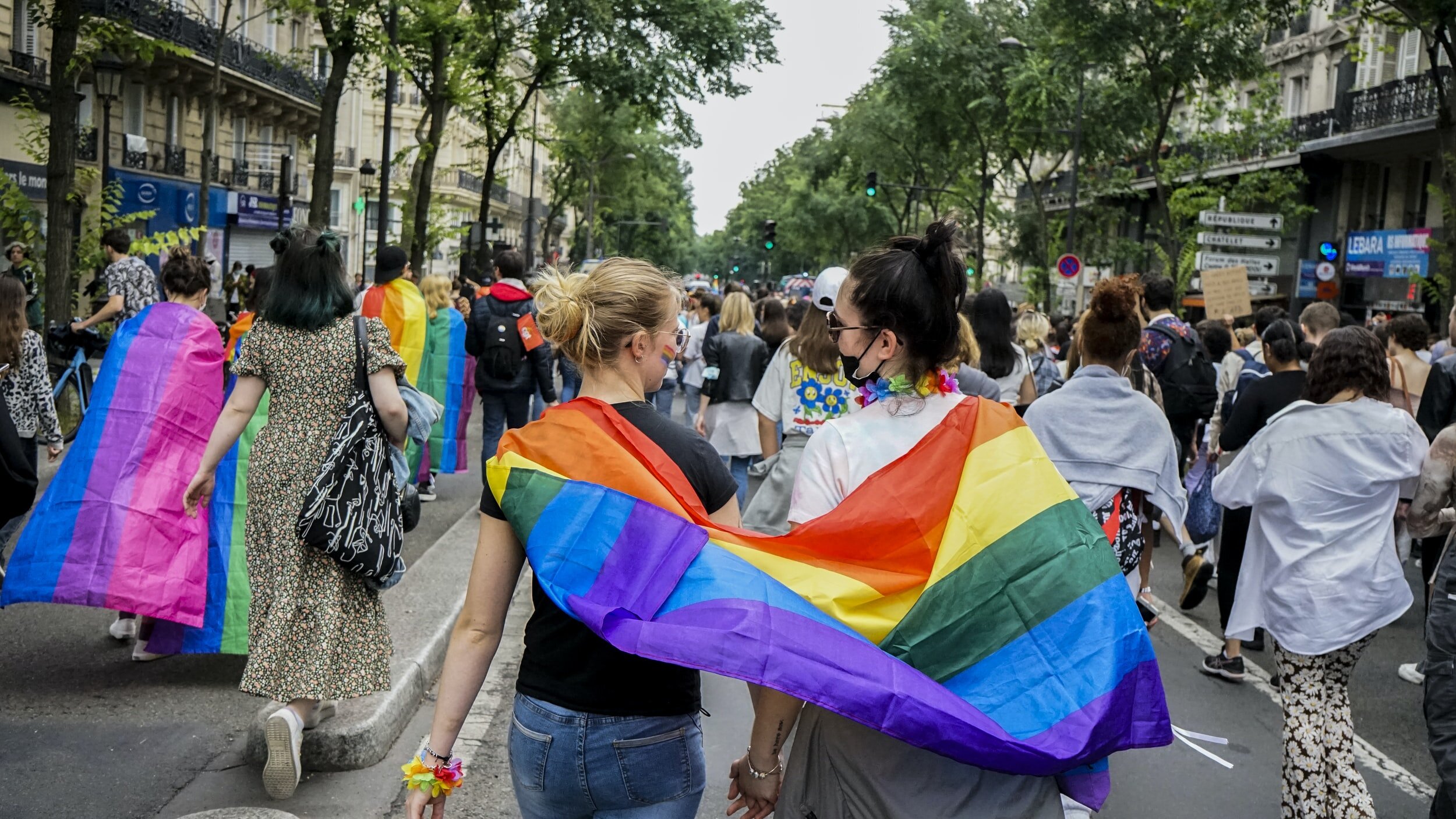
Beyond the Script: Reclaiming Your Authentic Identity as an LGBTQ+ Person
Share this:
When the world hands you a script for who you're supposed to be — and that script doesn't match who you actually are — the distance between those two realities can feel enormous. For LGBTQ+ individuals, that gap is often not just uncomfortable; it can be life-altering.
Society has long operated on a set of unspoken assumptions: that everyone is heterosexual, that gender exists in only two fixed forms, and that love, attraction, and identity follow a single, predetermined path. These assumptions aren't neutral. They become **preset identities** — invisible scripts handed to us before we're old enough to question them. And when your authentic self doesn't fit the script, the pressure to conform — or to hide — can be immense.
But here's what's also true: the journey of stepping outside that script, of reclaiming who you actually are, is one of the most courageous acts a person can undertake.
The Weight of a Script You Never Chose
From childhood, LGBTQ+ individuals absorb messages about who they're supposed to be. These messages come from family dinner tables, school hallways, religious institutions, and cultural traditions. The preset is clear: be straight, be cisgender, follow the expected path.
When your inner reality doesn't match that preset, the result is often a profound internal conflict — not because something is wrong with you, but because you're being asked to live inside a story that was never yours to begin with.
The psychological toll of this conflict is well-documented. Research from the Trevor Project found that in 2023, **67% of LGBTQ+ youth reported symptoms of anxiety**, and **54% reported symptoms of depression** — figures significantly higher than their non-LGBTQ+ peers. For transgender and nonbinary youth, those numbers climb even higher. These aren't statistics about inherent fragility. They're statistics about what happens when people are asked, repeatedly and relentlessly, to be someone they're not.
Psychologists call this **minority stress** — the chronic, cumulative burden of navigating a world that treats your identity as a problem to be solved. It's not the identity itself that causes harm. It's the stigma, the rejection, and the exhausting work of concealment.
Internalized Scripts: When the Pressure Comes From Within
One of the most painful aspects of growing up with a preset identity imposed on you is what happens when you start to believe it yourself.
**Internalized homophobia, biphobia, and transphobia** — the process of absorbing society's negative messages about LGBTQ+ identities and directing them inward — is one of the most significant barriers to self-acceptance. When the world tells you, in a thousand subtle and not-so-subtle ways, that who you are is wrong, unnatural, or shameful, those messages don't stay outside. They move in.
This internalization can look like self-disgust, an inability to form authentic relationships, or a deep-seated sense that you don't deserve the same happiness as everyone else. It can manifest as distancing yourself from other LGBTQ+ people, or feeling contempt for those who are more openly themselves — a kind of self-protection that ultimately deepens the wound.
The research is clear: higher levels of internalized stigma are directly linked to lower self-esteem, greater depression, and poorer mental health outcomes. But understanding *where* these feelings come from — not from within you, but from a world that handed you a broken script — is the first step toward setting them down.
The Preset Isn't Just About Sexuality or Gender
It's worth naming something that often goes unspoken: the preset identity imposed on LGBTQ+ individuals isn't only about being straight or cisgender. It's also about *how* you're supposed to be LGBTQ+, if you are.
Cultural and family expectations layer on top of each other in complex ways. In many communities, LGBTQ+ identity is seen as incompatible with cultural heritage, religious tradition, or family legacy. The pressure isn't just "be straight" — it's also "don't disrupt the family narrative," "don't bring shame," "don't be *that* kind of person."
Globally, **51% of LGBTQ+ youth report experiencing prejudice within their own families**. Even in more accepting families, love can come with conditions — a quiet tolerance that still asks you to minimize yourself, to not be *too* visible, to keep the peace.
These layered presets — from society, from culture, from family — create a kind of identity maze. And navigating it, especially without a map, can feel profoundly isolating.
Reclaiming the Story: What Authenticity Actually Looks Like
Here's what the research — and the lived experience of countless LGBTQ+ people — consistently shows: **authenticity is not a destination. It's a practice.**
Reclaiming your identity beyond the preset isn't a single moment of revelation. It's a gradual, nonlinear process of questioning the scripts you've been handed, grieving the time spent hiding, and slowly, carefully, building a self that belongs to you.
One of the most powerful examples of this reclamation is the word "queer" itself. Once weaponized as a slur, it was reclaimed by activists in the 1980s as a term of pride and defiance — a deliberate act of taking a tool of oppression and transforming it into a symbol of self-determination. That same spirit of reclamation lives in every person who chooses to live authentically, on their own terms.
Reclaiming your identity often involves:
You Were Never the Problem
If you've spent years trying to fit a preset that wasn't made for you, it makes sense that you're tired. It makes sense that you've questioned yourself, hidden parts of yourself, or wondered if something was fundamentally wrong with you.
Nothing was wrong with you. The script was wrong.
The work of reclaiming your identity — of stepping outside the preset and asking *who am I, really, when no one is watching?* — is some of the most important work a person can do. It's not easy. It involves grief, fear, and the very real risk of losing relationships that were built on a version of you that wasn't fully true.
But on the other side of that work is something the preset could never offer: a life that actually fits. A self that you recognize. A sense of belonging that doesn't require you to disappear.
You are not the identity that was handed to you. You are the one doing the questioning — and that questioning, however uncertain it feels, is the beginning of everything.
Ready to Transform Your Life?
Explore our books and digital products designed to guide your journey of self-discovery.
Explore Books